
Download this Factsheet as a PDF

Join us on facebook Follow us on twitter YPTE blog


A random image

Climate Change

Climate change news headlinePlease click here to download our issue of Conservation Education  on climate change. (PDF format)

Did you enjoy reading Conservation Education?  You can download more free issues by visiting our Download Area.


Climate Change


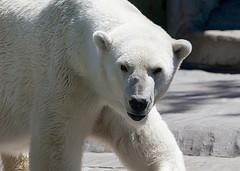
Do you like Polar Bears?  Well, every time you switch on the light you are using electricity which is one of the problems causing them to become extinct.

Alarming as it may seem, we are ALL contributing to the sad story of animals dying out – a story that we hear about in the news every day.  This is not even including the other devastating effects that climate change is predicted to have on us and the Earth.  Start doing your bit now by reading on to find out exactly what climate change is, how it is caused and what effect it is having on our planet. Because if we all ignore climate change our planet will become more and more out of balance until it is too late.

‘Climate change = the build-up of man-made gases in the atmosphere that trap the sun’s heat, causing changes in weather patterns around the world’.

Before we look at climate change and its related issues – Global Warming, the Greenhouse Effect, Greenhouse Gases, melting ice caps and rising sea level, let’s be sure that we understand what is meant by these big technical words.

What is Climate?
clouds_flickr_mr_t_in_dcClimate is ‘the general weather in one place over a long period of time’. So it’s not what the weather is like today, it is the average weather conditions over a few years. Meteorologists (scientists who measure the weather) collect detailed information about the weather every day, often using high-tech satellite and computer systems. Hundreds of measurements are calculated and the results compared to previous readings.

Climate Change
antartica_ice_flickr_christian_revival_networkFrom their readings, meteorologists have noticed that the world’s climate is getting warmer. But they also know that changes in the climate are nothing new. For example, 50 million years ago there was no ice at the Poles, but 18,000 years ago there was ice 2 miles thick in Scotland. Have you heard of the Ice Age? Not the film, but the condition that the earth was in many thousands of years ago! Earth has been in and out of ice ages all through its billions of years of existence. Much of the planet was regularly covered in huge ice sheets and glaciers as the air temperatures plummeted then rose again, causing the ice to melt. This is one reason why the woolly mammoth is thought to have become extinct. Its habitat melted and it couldn’t cope with the warmer climate.

A fuss about nothing?
So why does it matter that climate change is happening again? Because it is happening more quickly now than ever. Humans are believed to be speeding up the rate at which the climate is getting warmer, and many plants and animals cannot adapt quickly enough to the changes in order to survive, like the poor old woolly mammoth.

We are making climate change worse...

The problem: People!
people_flickr_ThisParticularGreg10,000 years ago there were no cars, planes, buses, trains or motor- bikes. There was no electricity – no TVs, electric lights, fridges, microwaves, washing machines, computers, mobile phones (imagine that – no computers or mobile phones!), central heating (brrr!), factories, power stations and so on. Things stayed like this for thousands of years. Early peoples used horses and oxen for farming and transport.

1700s: Then humans invented more complicated machines, which needed some sort of energy to power them. Coal, oil and natural gas (fossil fuels) were discovered underground.

1800s to present day: Then came electricity and the combustion engine. These both involved burning fossil fuels, which created energy for electricity and the machines, such as cars. Since their invention, industry and technology have improved rapidly, increasing the amount of power used in transport, manufacturing (making things in factories) and electricity. The population (number people) of the world has also increased dramatically, which means even more people use transport, manufactured goods and electricity.

For more information over-population see the factsheet Our Crowded Planet.

Greenhouse Gases and the Greenhouse Effect
Greenhouse gases are responsible for the Greenhouse Effect. But before we investigate that, let’s find out what greenhouse gases are. Can you name any of them?

The most well-known greenhouse gas is Carbon Dioxide or CO2. Other greenhouse gases are methane, carbon monoxide, sulphur dioxide, nitrous oxide and water vapour.

But greenhouse gases are not always bad. We actually need some greenhouse gases in the atmosphere in order for life on Earth to exist:

- Trees and plants would not survive without CO2 as they need it for photosynthesis.
- The plants in turn provide food for animals and they give out oxygen for animals to breathe.
- Greenhouse gases also keep the planet warm enough for life to exist.

Without them the world would be 33°C colder than it is now (and life would not be possible (the average temperature for November in the UK is around 6°C. This means it would be more like –27°C here instead. Brrrrr!). This is because the greenhouse gases form a protective layer in the atmosphere that stops all the sun’s warmth disappearing back up into space.

So why are they thought of as bad?
The trouble now is that the amount of greenhouse gases in the atmosphere is higher it would be naturally, and this is upsetting the world’s climate.

The greenhouse effect means that in general, the planet is getting hotter. But in some places around the world it is also getting wetter; some (like the Sahara Desert, which is getting bigger by 10 metres every year) are getting drier and others are getting windier. So it depends on where you live as to what effect climate change may have on you:

- The Inuits in the Arctic regions have noticed the ice melting more in the summer months and freezing less in the winter months.
- The Shanty towns in Asia and Latin America are suffering more floods and storms than in the past.
- The Europeans are witnessing more forest fires, melting glaciers and heat waves than ever before. Many locations in England experience hose pipe bans in the summer.

Global Wetting more like!
Did you know? Serious floods around the world, which used to occur every 100 years are now occurring between every 10 to 20 years.
Why? Because warmer air temperatures lead to more evaporation, which eventually causes more heavy rainfall.... Remember the Carlisle floods of January 2005?

Unfortunately it’s not just happening in the UK. The USA suffers from hurricanes every year, but the number and intensity is rising:

Between 1975 and 1989 there were 171 severe hurricanes in the USA. Between 1989 and 2005 there were 269 severe hurricanes in the USA.

Hurricane Katrina in New Orleans last year was the costliest and one of the deadliest hurricanes in the history of the United States. Hurricanes develop as a result of air warming up over warm seas, causing the air to rise rapidly and develop into major storms. The warmer the sea, the warmer the air, the worse the hurricane.

Coastal flooding
The ice caps at the North Pole (The Arctic) and the South Pole (The Antarctic) are slowly melting and this is causing the sea levels to rise. One scientist has predicted that the sea level rises will be approximately 49cm over the next 100 years. Another has said the rise could be as much as 8m! This shows that we don’t really know what’s going to happen, but we are sure that something is and the effects could be devastating:

If the sea levels continue to rise, many countries and cities could be flooded by the sea and lost forever. Bangladesh is one example (they already suffer from severe annual flooding); nearer to home, cities like London, Bournemouth, Cardiff, Newcastle, Carlisle and Edinburgh could also be at serious risk.

Even if the ice caps don’t melt, the oceans are likely to expand as they warm up and could cause coastal flooding anyway.

Water is also good at absorbing carbon dioxide – but becomes less good at it as it warms up, which means that as the seas warm up due to global warming, caused by increases in carbon dioxide in the atmosphere, it be- comes less efficient at soaking up the extra CO2! Frustrating, isn’t it?

The effect on wildlife
Many, many species of plants and animals are likely to be affected by climate change. Let’s pick out a few examples:

Polar Bears – These wonderful animals need ice to live on; it is their habitat and they are specifically adapted to hunting and breeding on and around it.

Seals need ice flows too – to rest and give birth to their pups on. If the ice flows continue to melt as quickly as they are, the seals and polar bears will die out as their habitat disappears. If the seals die out it means less food for the polar bears, too.

Plankton and Krill – at the beginning of the food chain, microscopic plankton and the tiny krill provide food for a huge number of animals in the sea, from barnacles, to fish and even sharks and whales. Plankton and krill is very easily affected by changes in sea temperatures and will move away or die if the temperature changes, even slightly. This reduces the amount of available food for other species in the food chain.

For many animals, such as mosquitoes and egrets, global warming could be a good thing as it means they can spread further afield into parts of the world that were previously too cold. The little egret used to be a rare sight in the UK; now it can be seen regularly in good numbers in estuaries in the South of England. Sadly slower animals like snails and frogs are not faring so well (they can’t move away as easily.

Many plants are not coping as well with climate change either. At least many of the faster animals (ones that can fly, in particular) can move or mi- grate to other areas if the conditions in their habitat change for the worse. But plants can’t move at all, so they are particularly vulnerable.

The climate is changing faster than the plants and some animals can adapt to the changes.

The effect on farming
Some experts are predicting that by 2060 the British climate will be more like that of the Loire Valley, France. This means that crops of sunflowers, oil seed rape (for cooking oil and cattle feed) and vineyards (growing grapes for eating and for making wine) are be- coming more popular in some parts of the UK – they like a warm, dry climate like parts of France.

So that is the good news. However, the bad news is that a lot of pests like locusts are now spreading into areas where they never used to be found. Aphids, (greenfly) are hatching earlier in the year and eating young, delicate seedlings.

The effect on our health.
Some scientists are worried that human health is at risk from some effects of climate change.
1.    Our winters are now not cold enough to kill off nasty germs and bacteria, which means they multiply and cause more of a problem.
2.    Mosquitoes carrying the disease malaria used only to be found in hot Tropical countries; now they are spreading further northwards be- cause the warmer climate suits them. There are fears that they could soon reach Britain.
3.    There are more heat-related deaths and cases of heatstroke and dehydration in places like France every year.